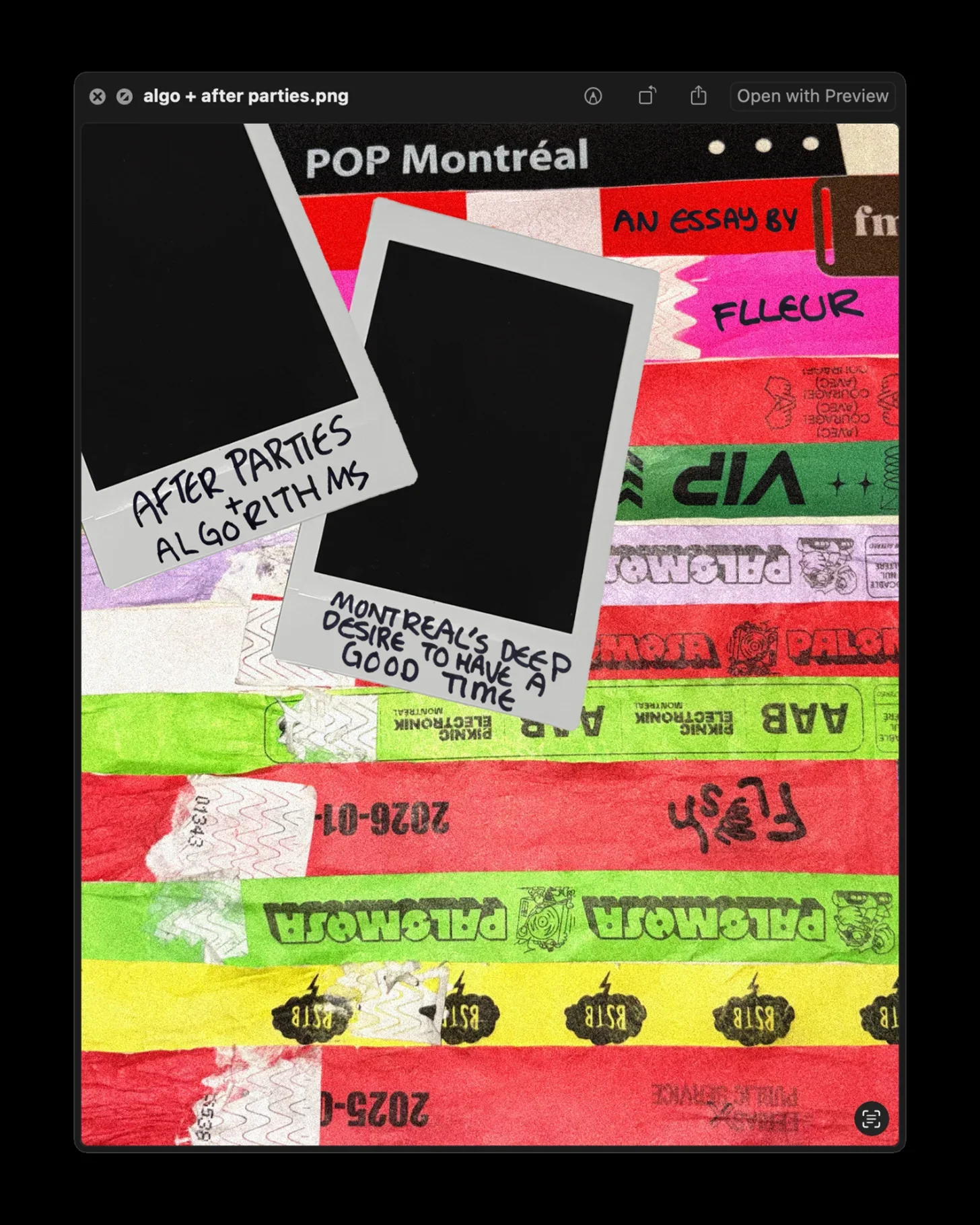
After Parties & Algorithms
Montrealer’s deep desire to have a good time
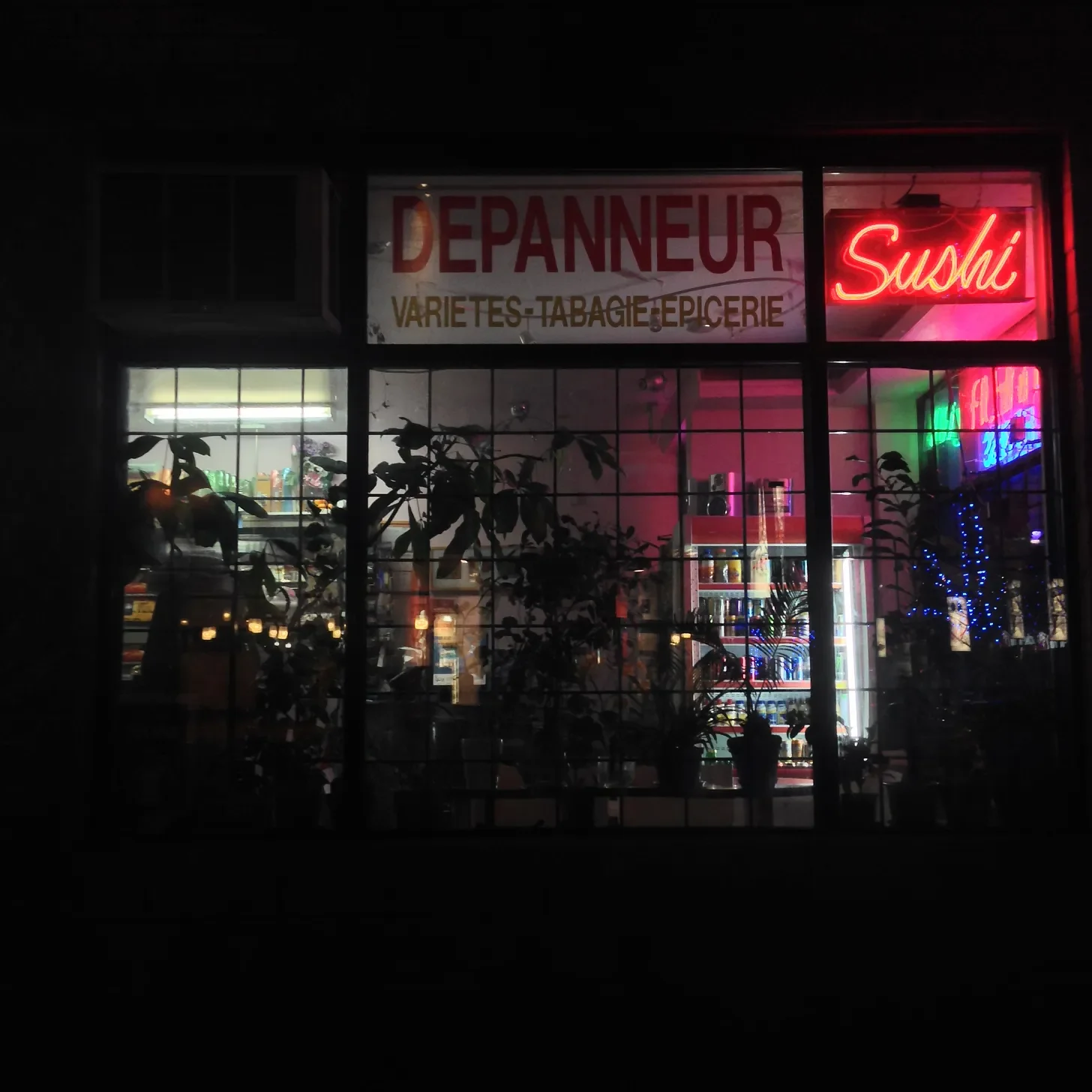
Montrealers have a deep desire to have a good time. Whether it’s the darkest, coldest stretch of winter, or the height of summer, when everyone is beautiful, your friends are everywhere, and there’s always a good show to go to. Montréal finds joy at any time and in any place. It’s in the iconic older man singing opera around the Plateau with his walking stick and his dog, and in the artists partying in the Durocher lofts. The city is constantly reinventing itself, evolving, and absorbing new creativity, turning that energy into everything from music festivals to murals to after-hour raves.
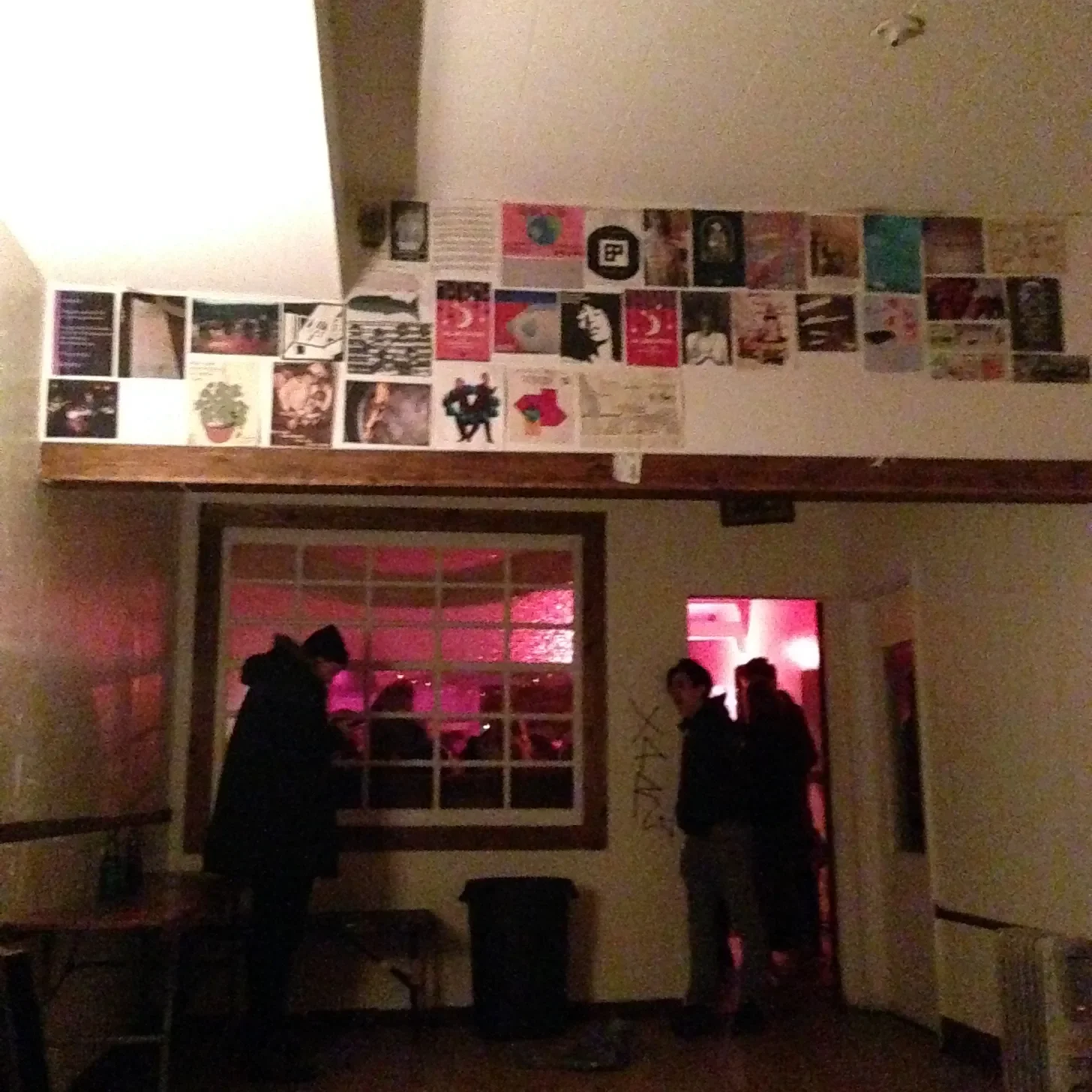
People here have a habit of saying, “Oh, it was so much better ten years ago, you just had to be there.” Every generation of creatives has heard the same complaint from the generation before; it’s a natural cycle. That’s not to discount, of course, the venues that have closed, the spaces that have changed, rising rents, or the politics that have made creative growth less affordable and less sustainable. Still, Montréal’s creative ecosystem is resilient, constantly re-emerging in different forms.
That said, spaces have changed, and communities have changed with them. They’ve splintered. There’s a clear before-and-after divide between those who were part of the scene pre-pandemic and those who came in after. It’s difficult for the two to find each other now, even though people genuinely want to build that connection. It’s not about gatekeeping, and it’s not about elitism. The pandemic created a stark break in how people naturally found the scene versus how they find it now, especially with so much of the culture having moved online.
The teenagers who were coming of age during the pandemic missed that vital bridge that comes with leaving high school (or CEGEP) and integrating into creative communities. Whether you’re arriving in Montréal from another province, country, or city, you usually learn the scene by going out, by returning to the same spaces, by getting to know local bands, DJs, promoters, and venues over time. Because that simply wasn’t possible for a while, a divide was created. People struggled to find the underground cultures and communities that already existed here. In turn, they built communities online out of necessity and isolation.
Obviously, this isn’t everyone’s story. But this COVID cultural change did create a noticeable gap, where people a bit older now have trouble connecting with people a bit younger, and vice versa. They often don’t know where to find each other or how to connect. At the same time, many collectives, events, and scenes emerged in defiance of this gap, with the mindset: “I can’t find the scene, so I’ll make my own.” That impulse is deeply punk at its core and is often how creatives survive and evolve.
We did lose a lot of venues in the process, largely due to COVID shutdowns, renovictions, and venues being priced out of their neighborhoods. Thinking back to 2015, places like Durocher, La Plante, Drones, Poisson Noir, and Tarot come to mind. Loft parties and semi-legal venues felt normal then. Now they feel more sparse. They definitely still exist, but they’re less prevalent than they once were.
At the time, these spaces hosted a lot of band shows, with the raves or DJ nights happening around the corner. Fast forward to 2026, and we see a rise in wholesome, community-oriented events, such as the drink & draws, mending nights, crochet and knitting clubs, collage nights, vision boarding sessions, and listening parties around the city. These are intentionally non-party spaces; intended to create genuine opportunities to meet like-minded people.
However, some of these events can feel gimmicky. It’s almost become a meme in Montréal, bordering on cringe, to attend daytime “raves” in cafés. The artists and organizers who are actually involved in the underground scene often find these events embarrassing. And yet, there are lines down the block for the matcha “raves.” Clearly, people are looking for connection, but maybe they’re just looking in the wrong places.
This isn’t a judgment of anyone who goes to these events; if they’re having fun, that’s great. But what might happen if we’re able to connect these parallel worlds? Participants from both sides could benefit from more overlap. DIY culture does involve what some might call gatekeeping, but it can be a healthy form of care, keeping scenes safe, protecting vulnerable communities, and preventing venues or parties, especially less-legal ones, from being shut down.
There’s no easy solution here, but more integration, whether through better marketing, cultural shifts, or simply participating in things you wouldn’t normally attend, is always a good thing. As much as it’s easy to complain about certain events being less “cool” than others, Montréal still offers an abundance of choice.
It’s not one person’s role to decide what’s cool or where the line between gatekeeping and accessibility should be; it’s a constantly evolving discussion. Through community organizing, event production, and simply showing up, crossover between these worlds can be encouraged, and our local scene can thrive. Just as much as people want to be booked for a cool show or throw the next big event, it’s equally important to show up for others, to seek out new spaces, see bands you’ve never heard of, and find venues outside the TikTok algorithm.
Because we all know... the best parties aren’t posted online.